The Chatham Honor System

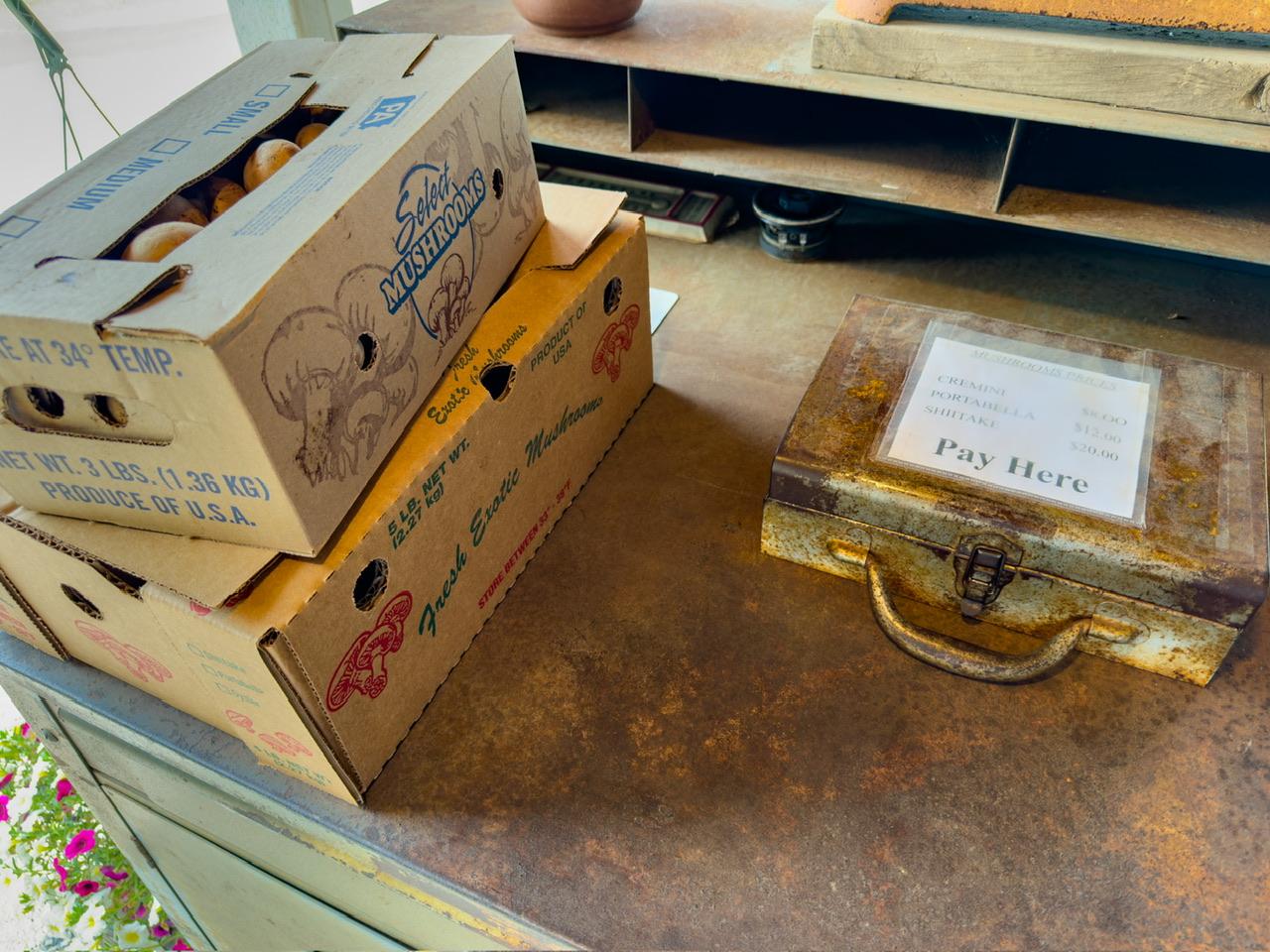
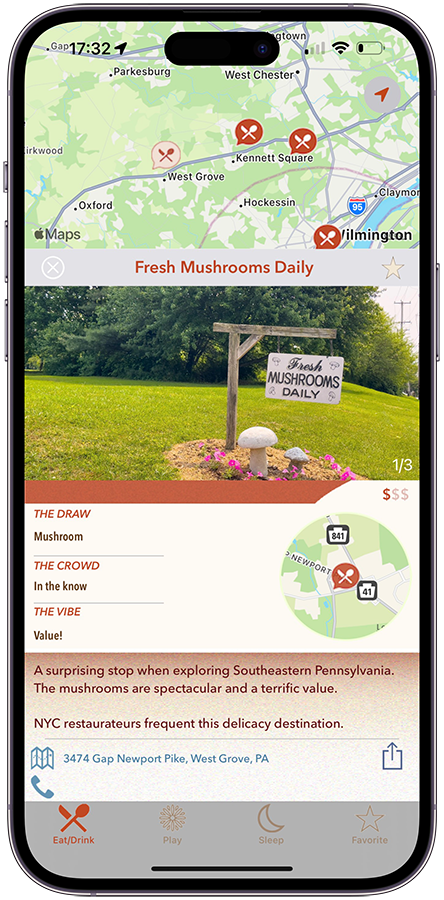
Amidst a tap to pay (and tip) world, it was a pleasure to discover Fresh Mushrooms Daily in lovely Chatham, Pennsylvania.


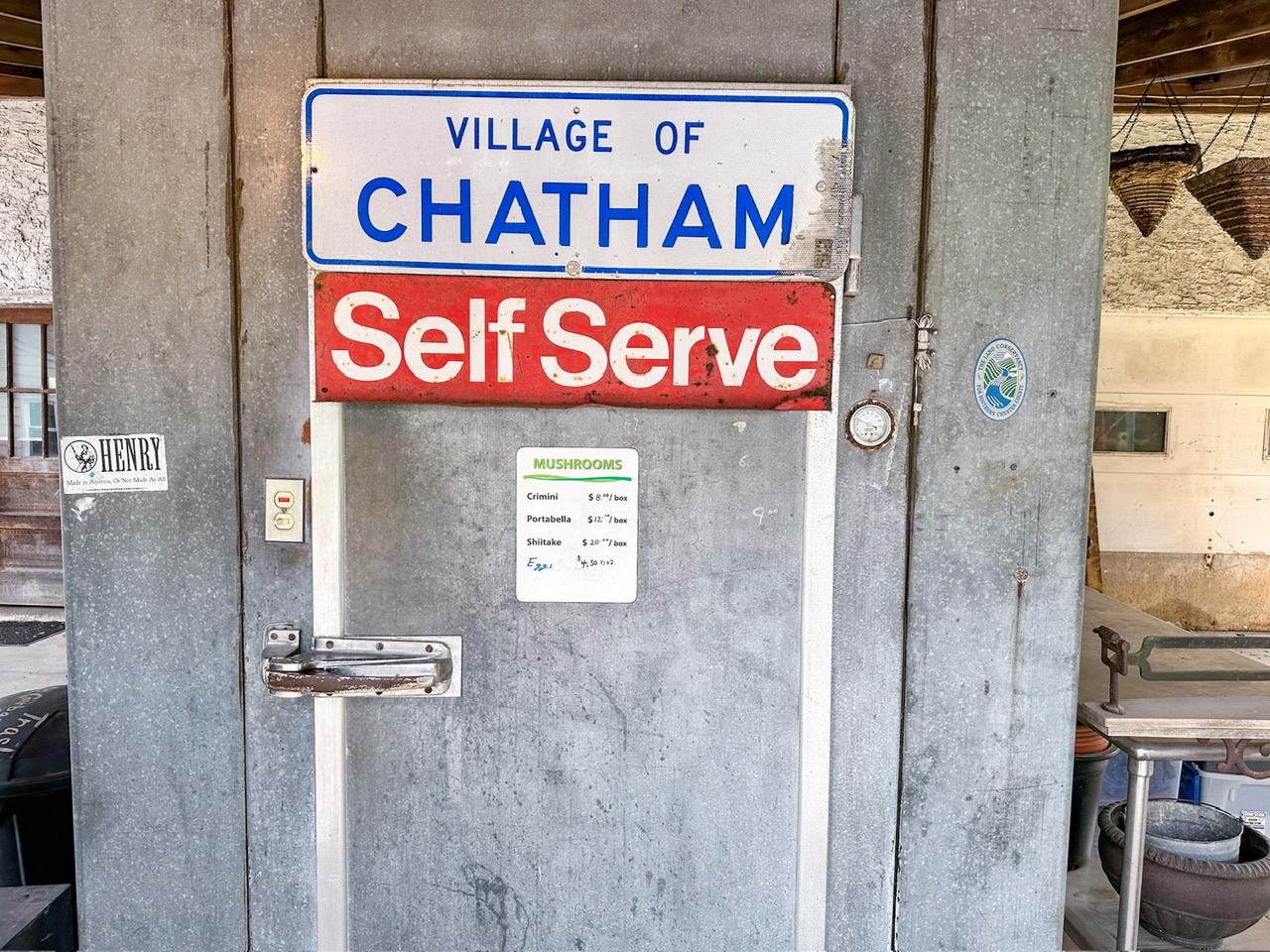
Operating on the honor system - that is select your purchase, pay and make change if necessary - a visitor quickly discovers that the mushrooms are huge, delicous and a tremendous value.


All, without adult supervision.


Stop, open the door and explore fresh mushrooms, daily.


Learn more about mushrooms, here.

sedso microlearning


3474 Gap Newport Pike, West Grove, PA 19390
Maps: Apple // Google


Explore in the amuz app.


Modern Approach to Wisconsin History Celebrates Native Civil War Hero

Life stories impact UW student historians


Students in Dr. Leslie Bellais’s History 401 class are required to use historic objects as a lens to the past. The objects tell the story of people and communities who are often forgotten.

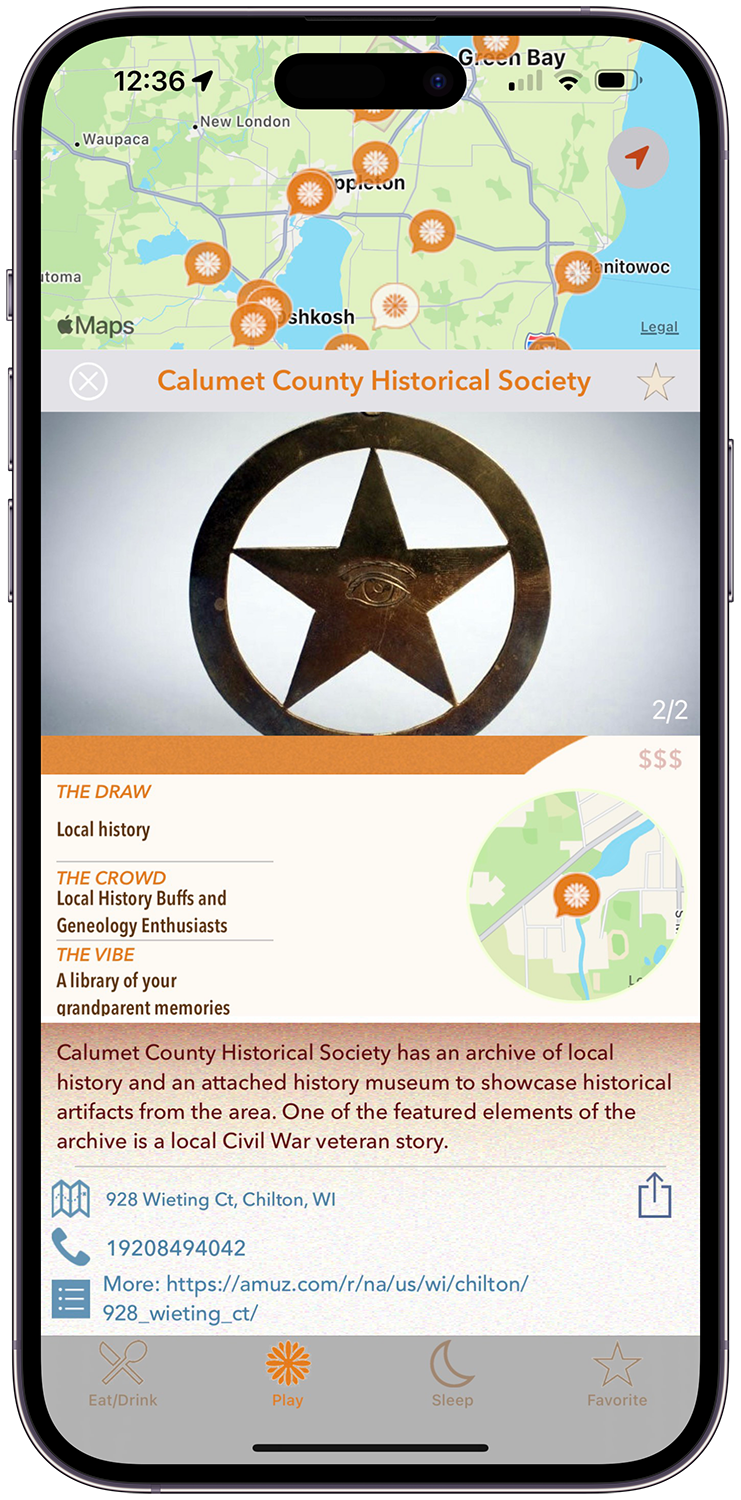
One such intriguing story is exemplified by a brass Civil War medal, which belonged to Native American Stephen Nicholas, one of the first residents of Chilton, Wisconsin. Nicholas was a member of the Stockbridge-Munsee tribe—a combination of two tribal groups who joined together when New England residents forced them out of the region. Nicholas arrived in Calumet County, Wisconsin as a child accompanied by his grandparents, who founded Chilton, in the early 1840s. On September 1, 1861, he enlisted in the U.S. Army, joining the 1st Wisconsin Cavalry. Like many other Native Americans in the Civil War, Nicholas worked as a scout.


In August 1862, after Nicholas and the rest of the 1st Wisconsin Cavalry freed over 100 slaves in a raid in Arkansas, Confederate Texas Rangers retaliated and captured not only many of the slaves, but also Nicholas and his fellow soldiers. While a POW, a Confederate general offered Nicholas a chance at freedom if he would desert the Union army. When he refused, members of his regiment fashioned a brass medal for him to honor his service and bravery. This was a particularly powerful statement because of the prejudice Native American veterans faced from their white peers. [www link. QR below]

Savannah Houdeshell, a recent graduate of the University of Wisconsin-Madison with a degree Anthropology and certificates in African Studies and History, researched the Civil War medal using the resources of the Calumet County Historical Society. This work appealed to her combined interests in military history and the treatment of Native Americans. Houdeshell plans a career as a naval aviator this summer.


History 401 leverages the amuz app [app store] to publish the student research. The idea is to help students learn in a modern way. They must do research, determine why the story might resonate with the app’s audience, and then share their work via a video, multi-media, and a timeline presentation. The object is geolocated so explorers can find areas of interest wherever they travel using the app.


Press Release [PDF]

Visit with this amuz route:


inquiries: nancy@amuz.com


Look up!


Explore with amuz iBooks, too


Carousel of Time

And the seasons, they go round and round
And the painted ponies they go up and down
We’re captive on the carousel of time
We can’t return we can only look
Behind, from where we came
And go round and round in the circle game

Joni Mitchell Circle Game lyrics
Historians frequently evaluate civilization through the prism of every day or special objects. Understanding the relevance of an object against a regional and time reference provides context.

Students in the University of Wisconsin-Madison's History 401 class have been investigating Wisconsin's past by selecting a significant object and deeply researching its provenance and influence. Guided by Leslie A. Bellais, PhD, who herself was a curator at the Wisconsin Historical Society, the students select objects they wish to learn more about. Partnering with amuz these students share insight and present their research in a modern way. Locations are easily displayed on a map often with eye popping drone or panoramic photography.

What does the object say and about the place where it was found? How was it used and why is it significant?

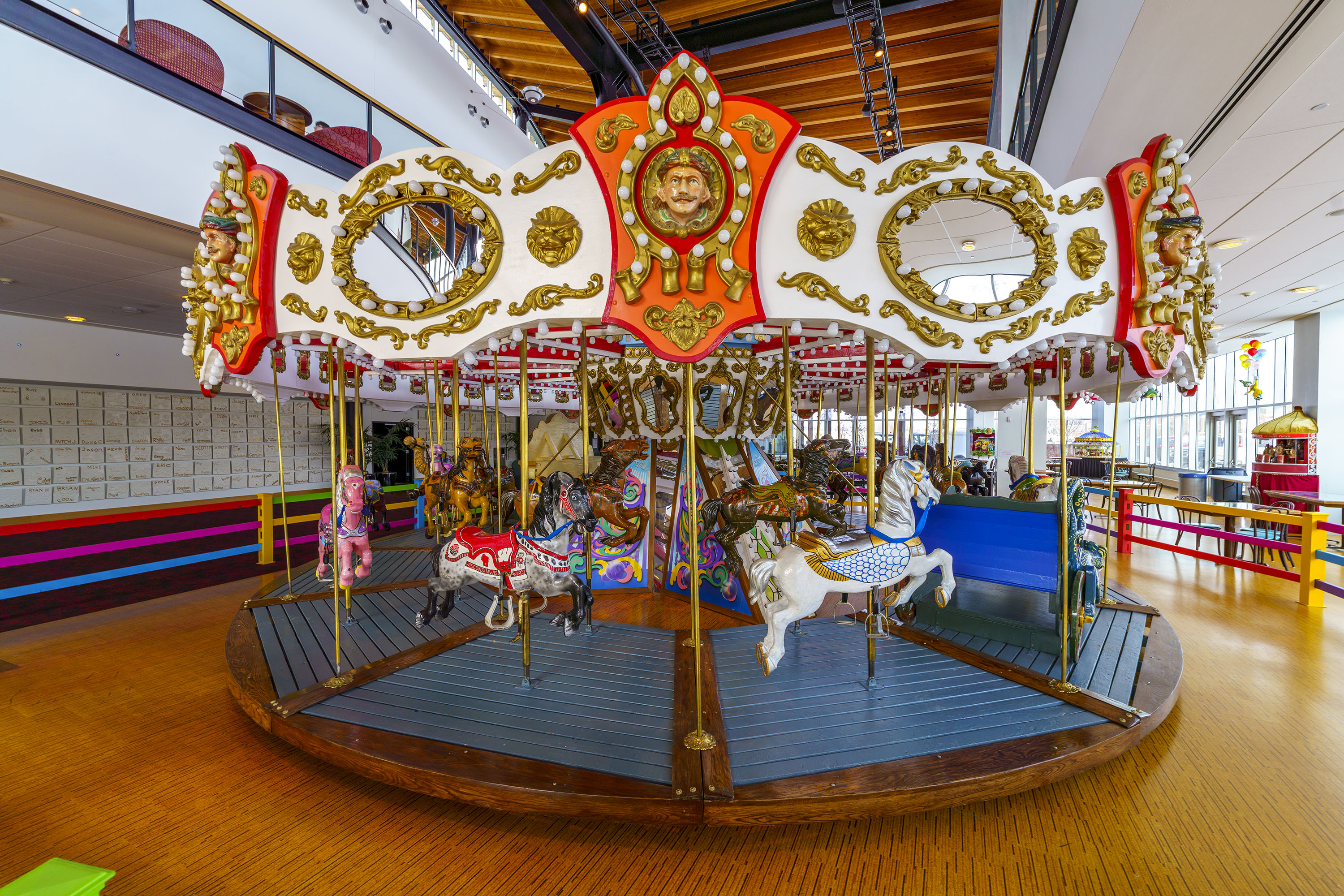
For Autumn Stroede, the Ella Carousel resonated because it represented happy childhood memories of trips to Ella’s Deli. Who would not enjoy ice cream and the opportunity to take a spin on the carousel?!

Alas, Ella’s is gone but thanks to Epic Systems the carousel is preserved for future generations.

Learn more about the carousel here.

6 Seconds

We had a blast yesterday discussing product and experience introductions, connections and sales.

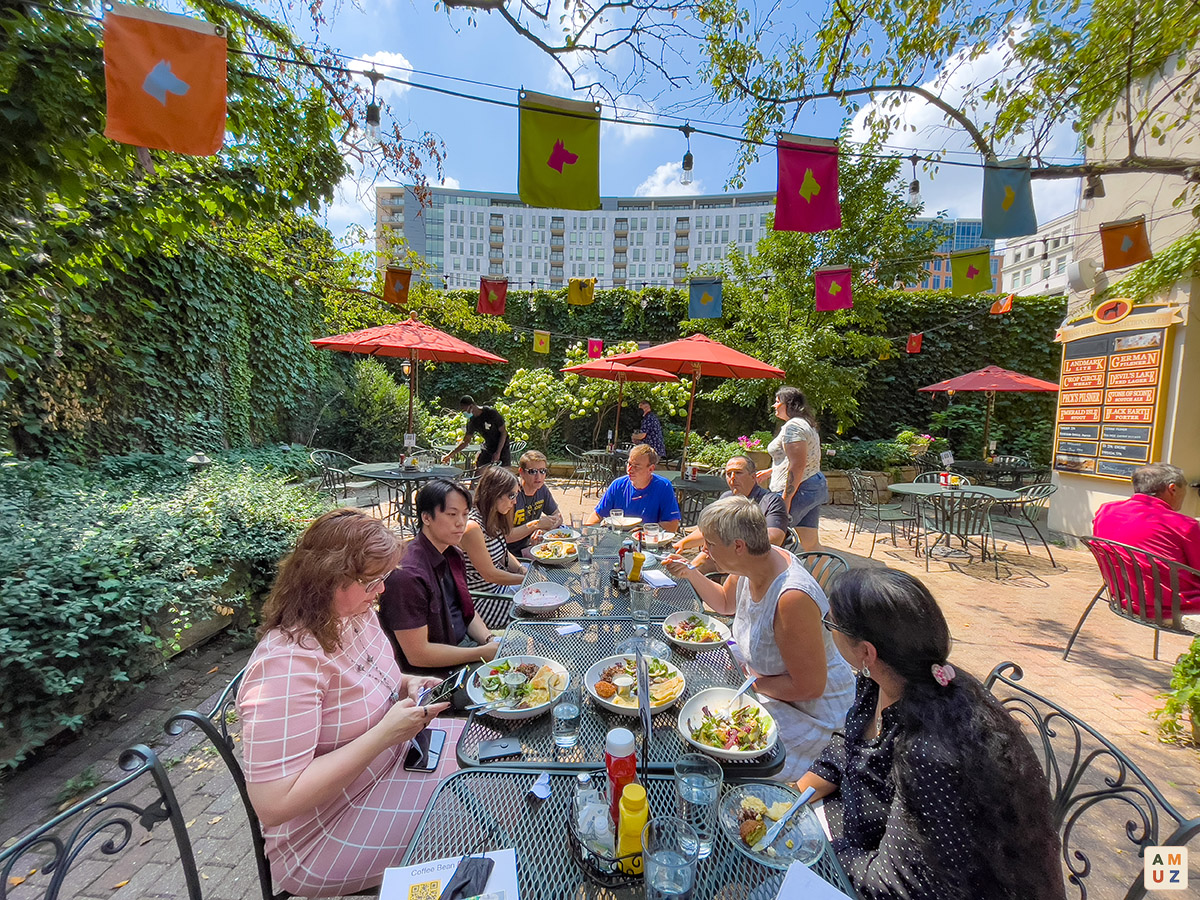
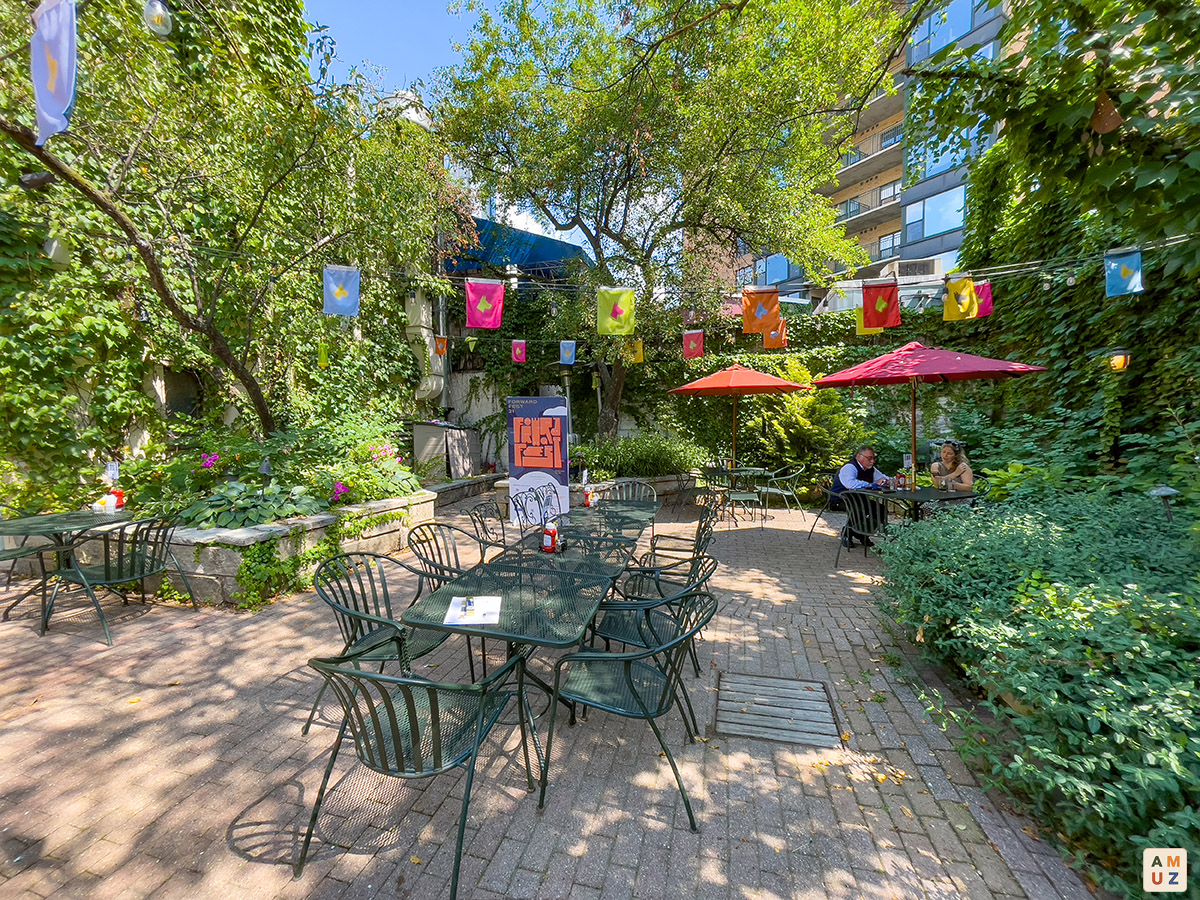
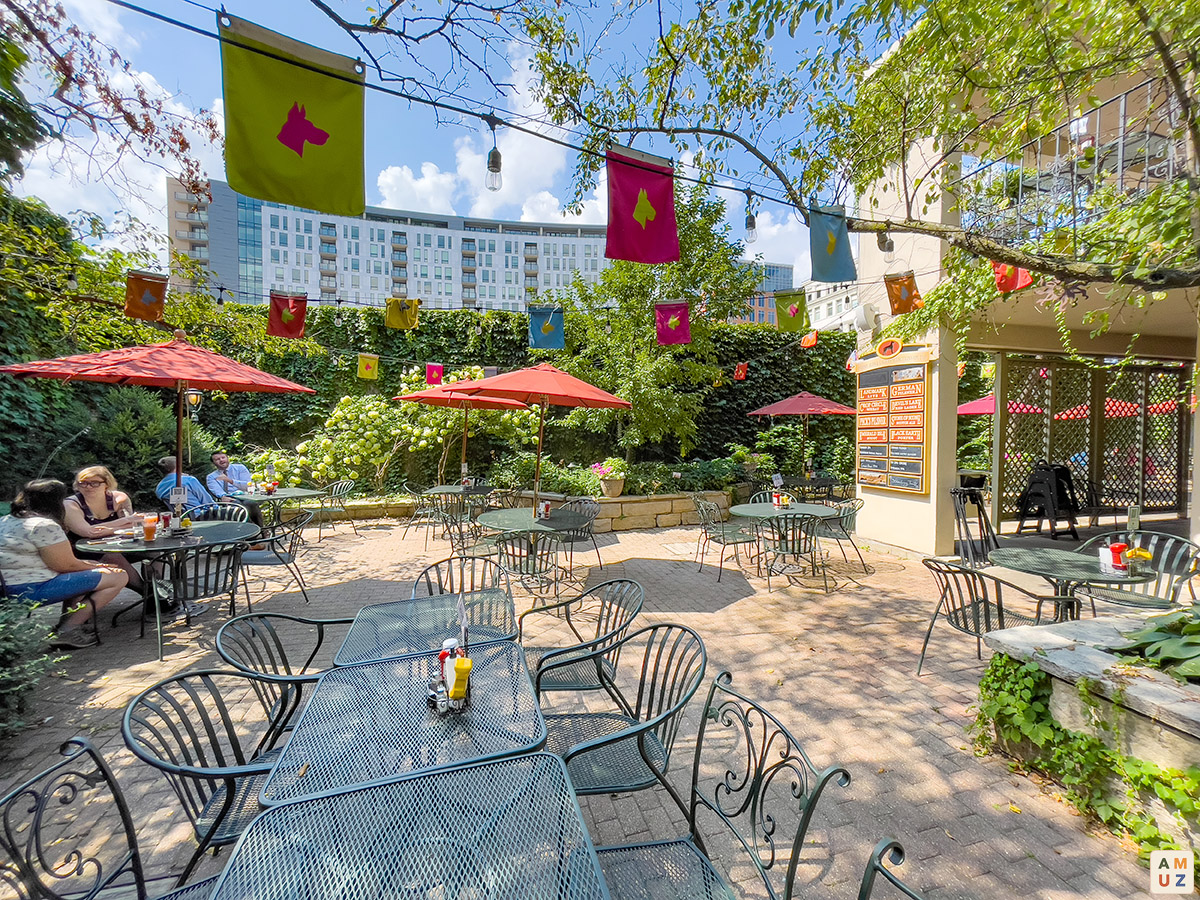
Madison's fun Forward Fest was the reason and Great Dane's garden the setting (for the oldster's, Madison's Fess Hotel).

The topic explored by a fun group of entreprenuers: You have 6 seconds with a prospect or customer. In 2021, what do you do or say?


We've been thinking about this for awhile and have launched several fast visual e-commerce and connection experiences.

2 steps to a sale with amuz! Learn more: info@amuz.com

What fun to gather and share experiences, ideas and challenges.

The Spanish Discovery of San Francisco Bay

The 9-foot statue was sculpted by Spanish artist Josep Maria Subirachs and his associate, Francesc Carulla. It was given to the State of California by the autonomous region of Catalonia in Spain in 1988. Catalonia was the birthplace of Don Gaspar de Portola, leader of the expedition responsible for the European discovery of San Francisco Bay. The explorers camped on the beach near the statue site (erected in the public parking lot at Crespi Drive and Highway One.) and later journeyed up the hills to Sweeney Ridge.

The Portola expedition was well documented. Over two hundred years ago, the Spanish expeditionary force "missed their turnoff" at Monterey Bay and ended up in what is now Pacifica. Aided only by a mariner's navigation handbook of the Alta California coastline, Captain Gaspar de Portola and his party set out to map the land route from Baja California to Monterey Bay.

June Langhoff

In 1769, Spanish leaders sent Captain Juan Gaspar de Portolá to lead an expedition to stake claim to southern and central California. Portolá and his party of sixty men (with a caravan of 200 horses and mules for riding and the pack train) came from San Diego in search of Monterey Bay, but from their overland approach, they failed to recognize it. The expedition members were hungry, lost, and sick after six months journey. They were assisted by Native peoples along the way, and the local Ramaytush Ohlone people warmly greeted and fed them.

For millennia the Ohlone people followed seasonal rounds of hunting, fishing, and managing the land for their needs. In 1769, about 2,000 Ramaytush Ohlone people inhabited the San Francisco Peninsula, living in a network of ten independent tribes. The Aramai tribe, of modern-day Pacifica, accompanied the explorers to the top of Sweeney Ridge, where the Portolá party became the first Europeans to see San Francisco Bay. The Spanish “discovery" of San Francisco Bay would soon mean the loss of Ohlone lives, homelands and traditional ways when Spanish colonization started seven years later.

National Park Service

‘HISTORY IS NUANCED AND OUR STATUE IS NO EXCEPTION’

PORTOLA STATUE GIFTED IN COMMON BOND, NOT CONQUEST

Recently, communities throughout the United States have been examining whether some existing statues and monuments are not appropriate and therefore should be removed.

As part of this broad issue, the statue of Gaspar de Portolá (at the intersection of Highway 1 and Crespi Drive near the Pacifica Community Center) has become a focus of attention. A recent July 22nd Pacifica Tribune featured interviews with Danielle Gustavson and Jonathan Cordero about their requests to remove the Portolá statue including a petition.

The Pacifica Historical Society wants people in Pacifica to become more educated about the history of the statue itself, as well as learning about the impact of Spanish colonization on native populations.

History is often nuanced and complicated, and the background story about our statue is no exception. It involves significant state and international connections.

Pacifica Historical Society weighs in on Portola statue

Tribune: What is the goal?

Gustavson: In light of the hate crime inflicted upon George Floyd, it is our intention to address racial inequality through statuary in our own community, and in doing so, try to transform it. We cannot move forward and heal wounds of the past and present, if we as a community continue to choose to ignore and glorify a past built upon the oppression of marginalized peoples.

Tribune: What statues concern you?

Cordero: The Junipero Serra statue on I 280 and the Gaspar de Portola statue in Pacifica. Jonathan-Cordero-1

Gustavson: Statues that offend marginalized peoples are a concern, if that community also claims to believe, “All men are created equal.”

Tribune: Why Portola?

Cordero: Portola was a colonizer of Native peoples. The Portola Expedition began the process of Spanish colonization in California.

Organizers explain why they want Portola statue removed

We, the undersigned, are calling for the removal of the statue memorializing colonizer Gaspar de Portola. The highly visible statue is located in one of the most frequented public spaces in Pacifica, next to Highway 1, Linda Mar Beach and its Community Center.

Gaspar de Portola was not the hero that people were led to believe when his statue was first erected. He was a colonizer born of Catalonian nobility. He was commissioned by the Spanish Crown to create a route for the Spanish settlement in California. The intent was to remove Native Americans from their ancestral homelands. The route Portola is given credit for was established on pre-existing Native trails. He did not “discover” Pacifica, nor did he “discover” the San Francisco Bay. The San Francisco Bay region had been inhabited for thousands and thousands of years by Native Americans before the arrival of Portola.

Pacifica was home to the Aramai, a distinct tribe among dozens of independent Ohlone tribes Native to the Bay Area. They inhabited Pacifica for over 3,000 years before Spanish colonies decimated their people, language, history and culture.

Be on the Right Side of Pacifica's History: Remove the Statue of Colonizer Portola
Unexpected AR

Museums that surprise - and teach!

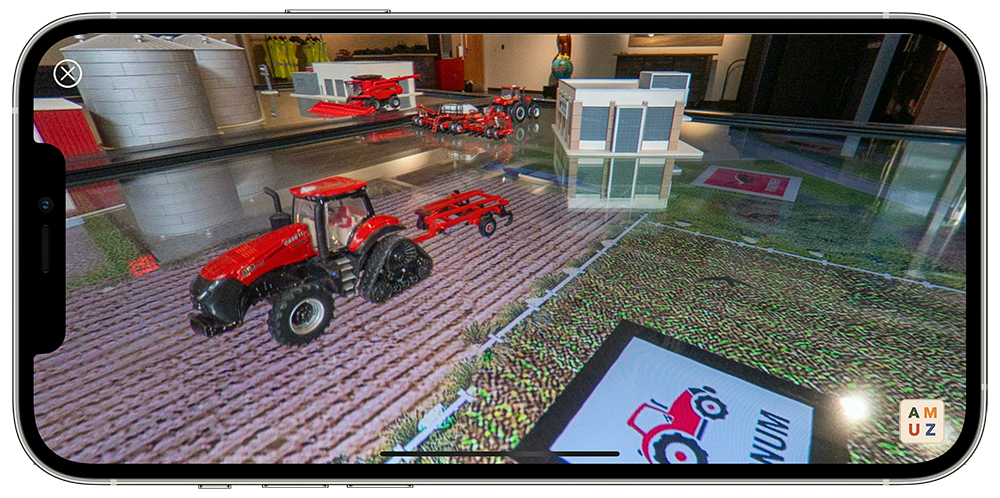
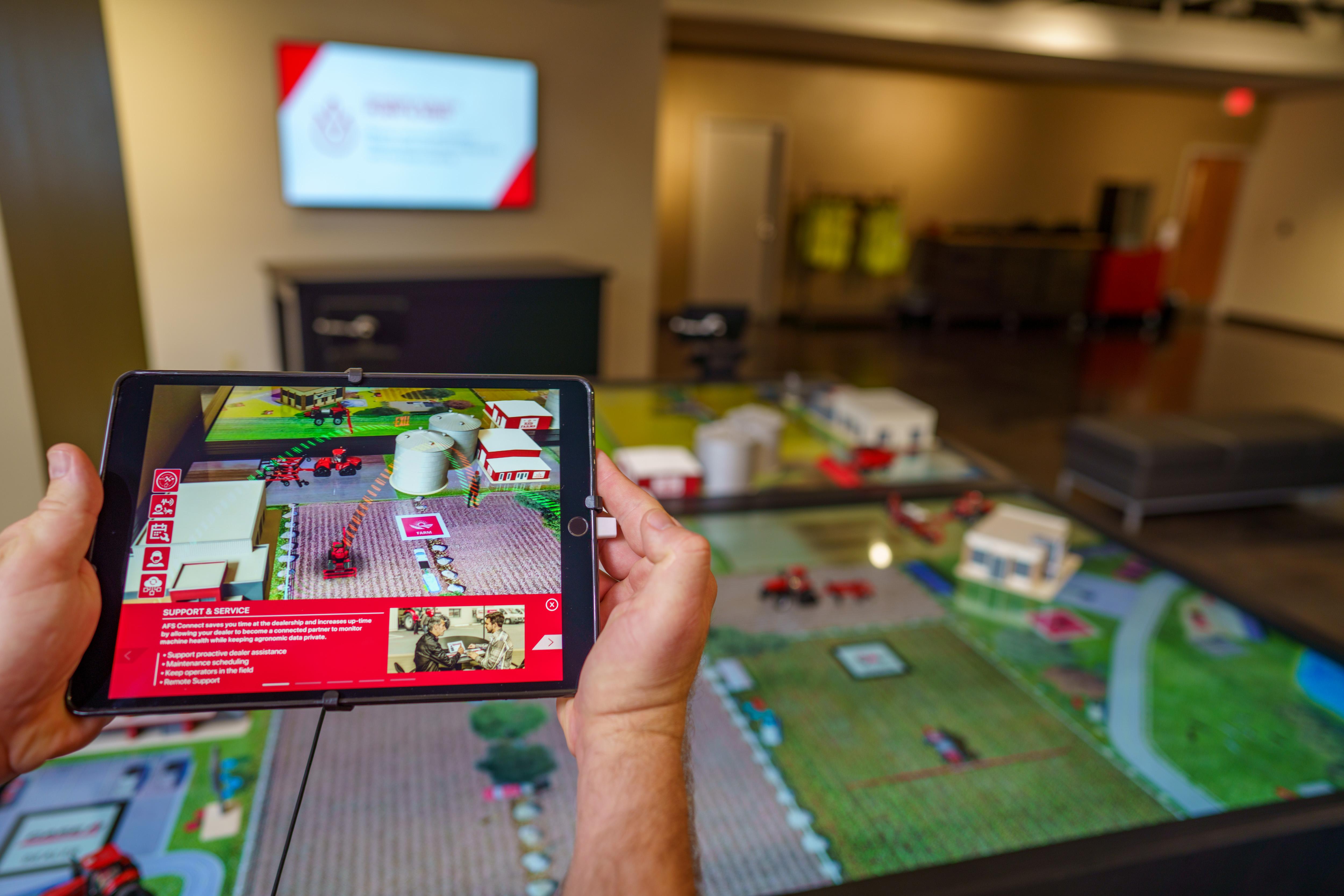
Wandering around the CaseIH Experience Center recently, I was surprised to find an Augmented Reality (AR) experience designed to help customers understand farm operations and equipment technology.

Point the iPad at different locations on the giant screen and learn about software applications for agri-business.

Of course, the experience included tractors produced over the years and a Case car.

Tractor displays featured the expected product specifications, smartly joined with product and brand positioning assets.

The company is a leading supplier of agricultural and construction equipment. Competitor John Deere offers product and museum venues in Moline, IL and Waterloo, IA. Explore those locations in amuz: iPhone Android

Market Background

A distant observer of this market, I have long been somewhat amazed at the proliferation of models and price points in the midst of massive farm consolidation.

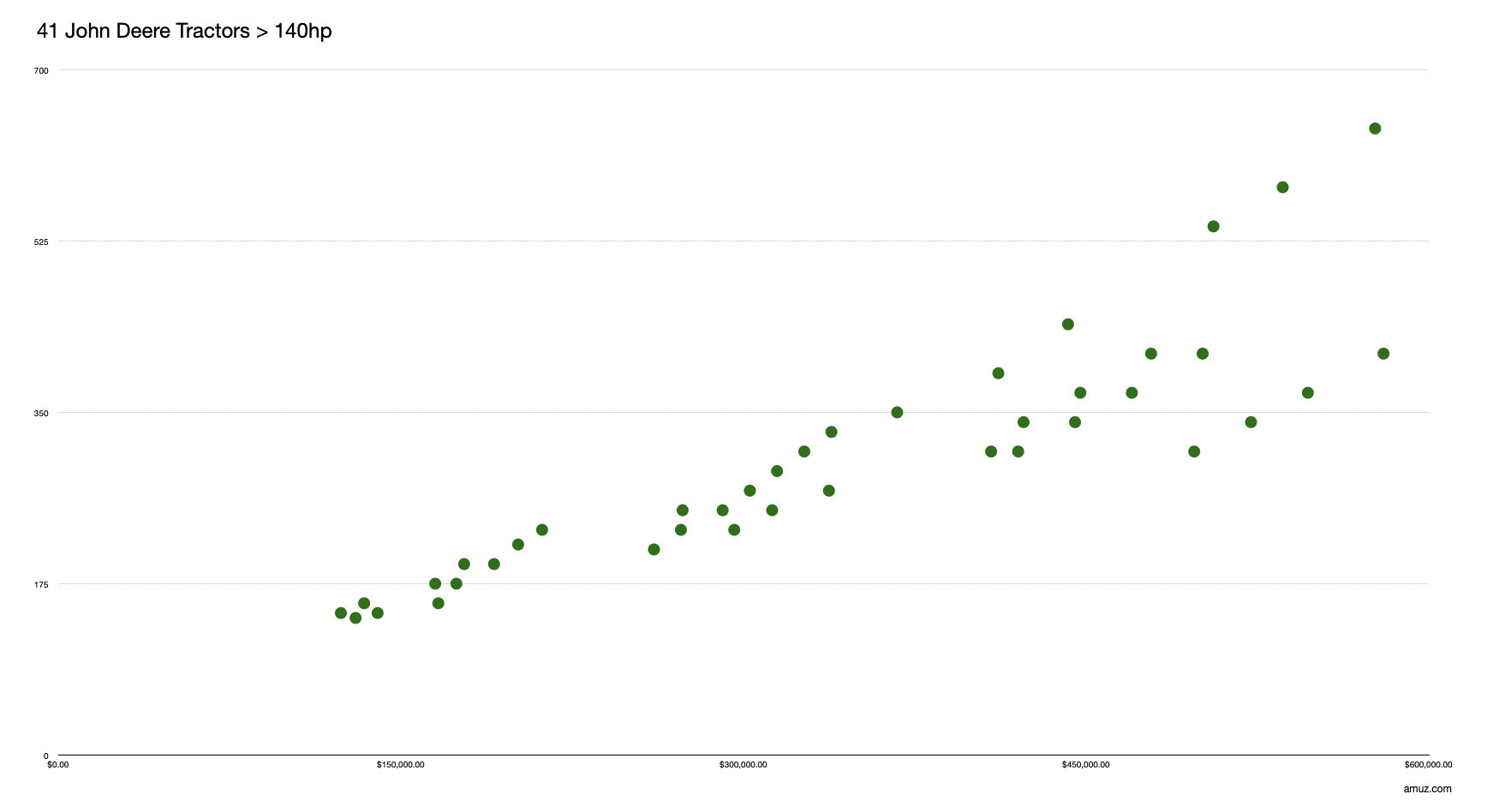
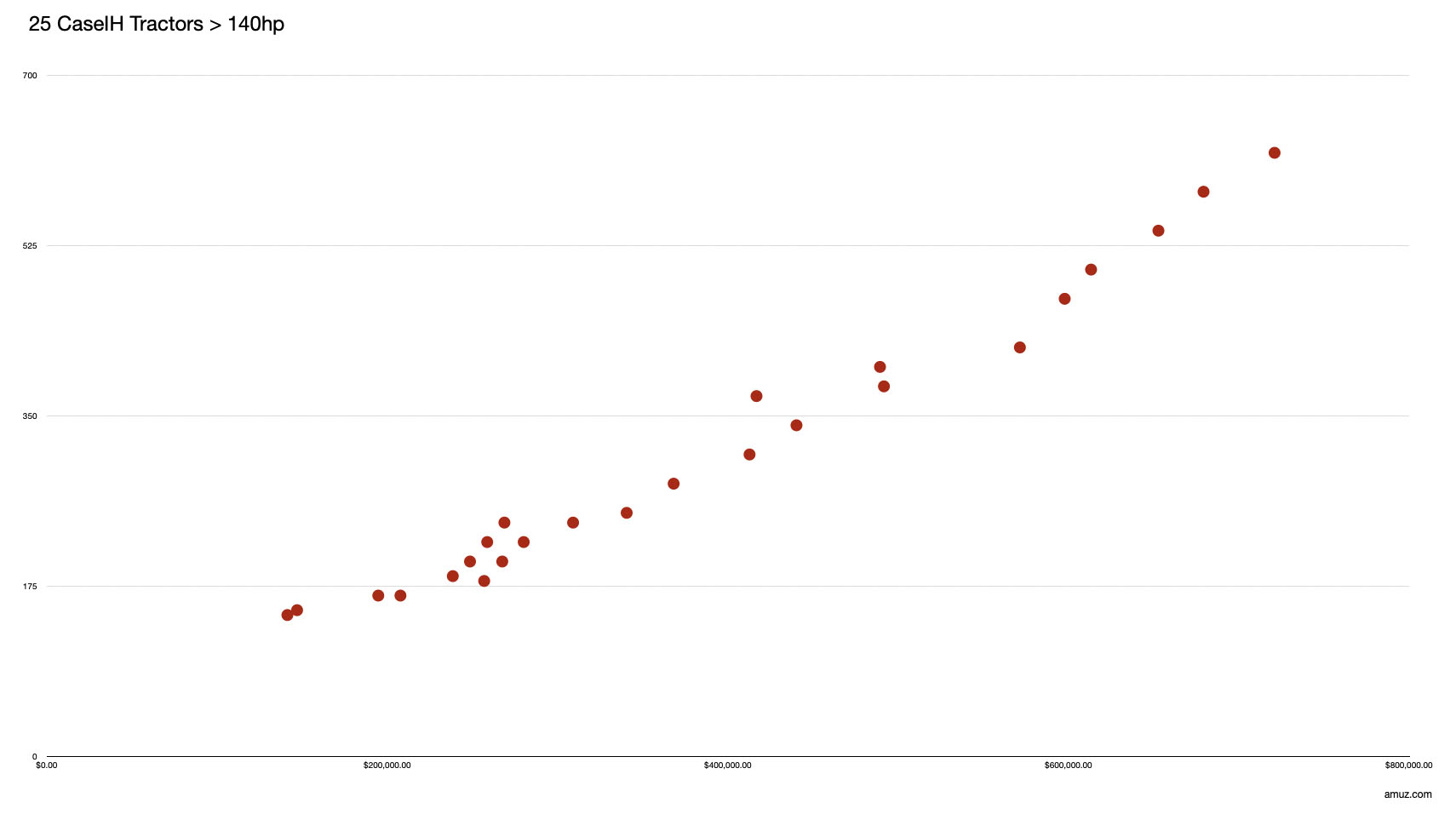
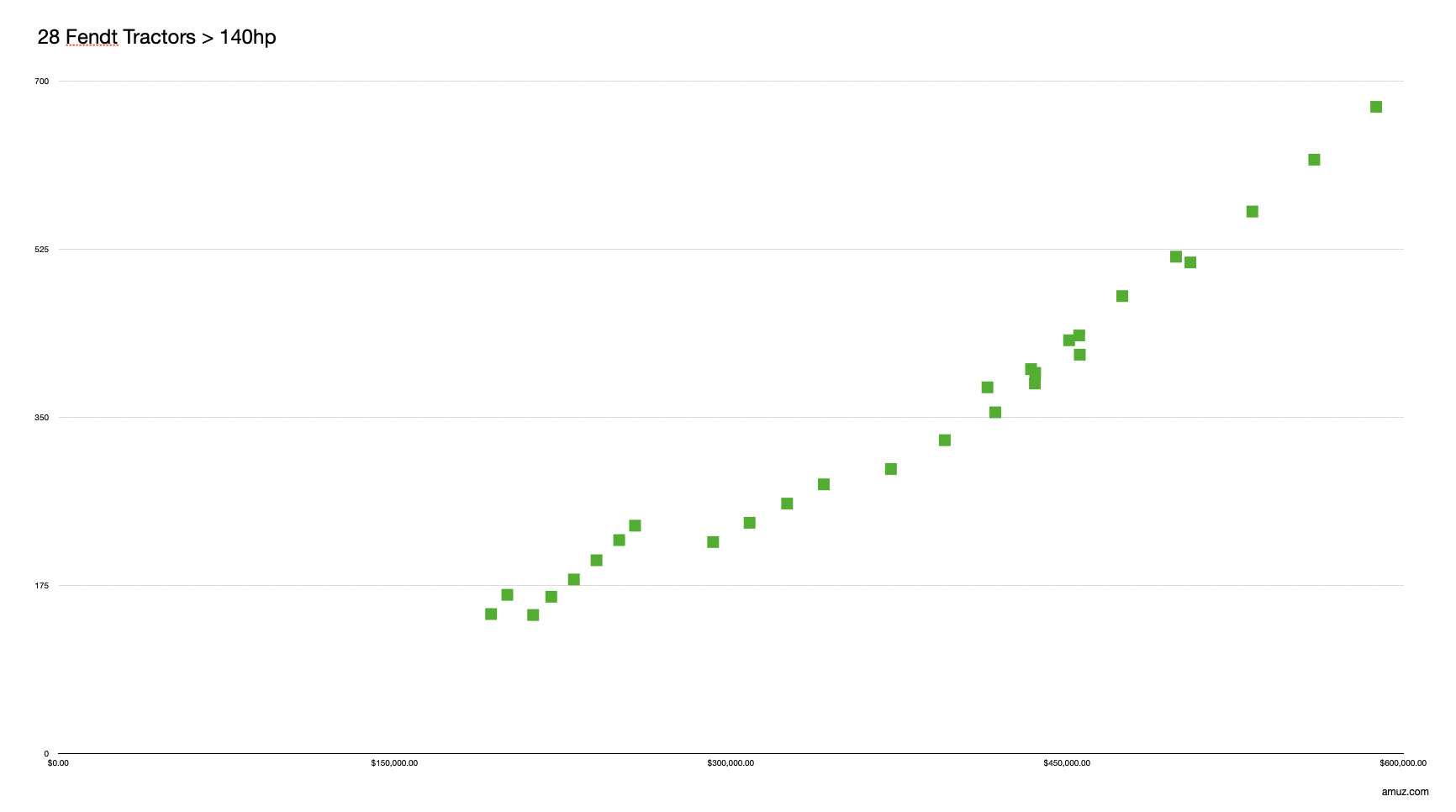
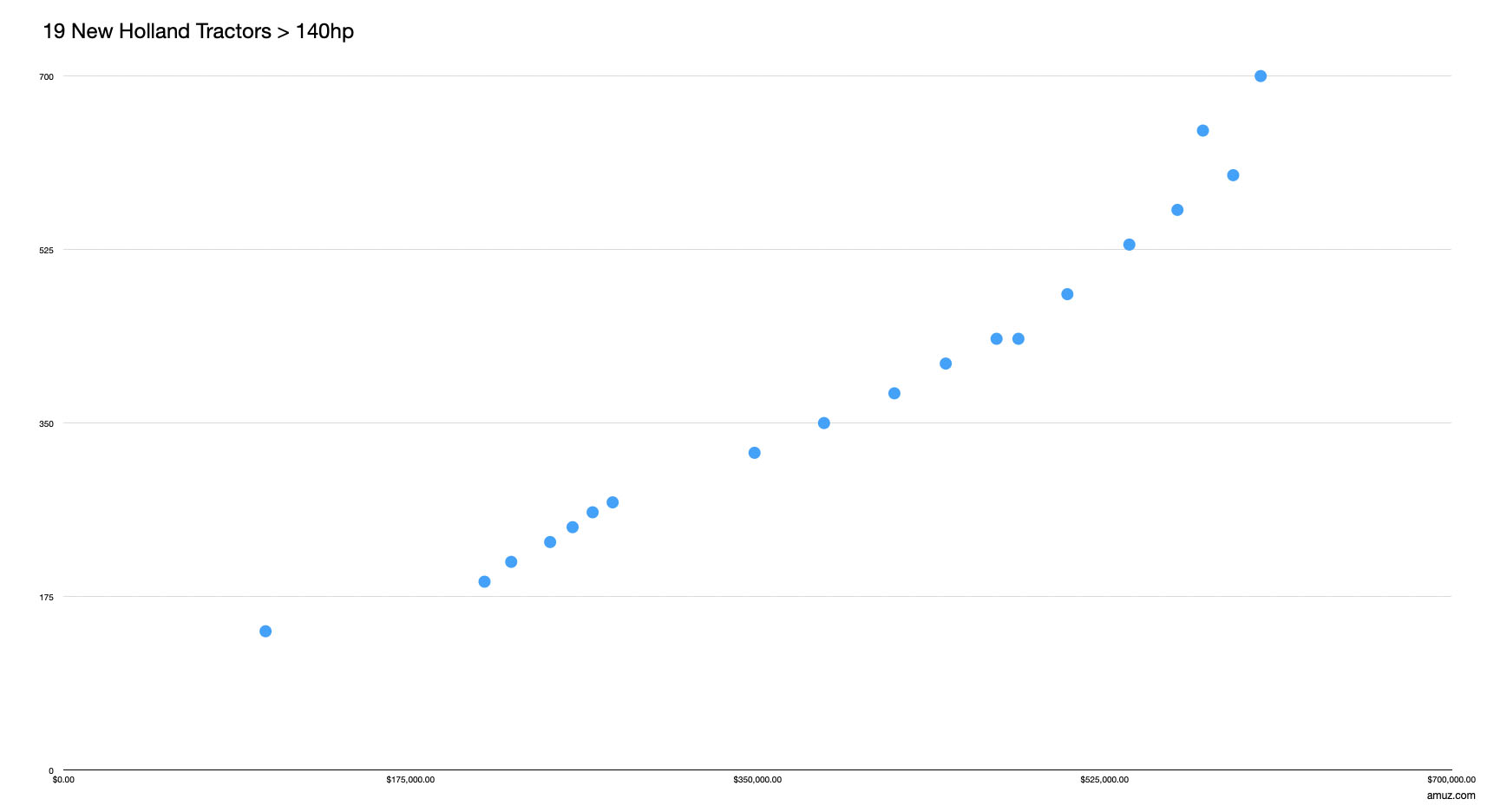
I learned that the market for > 140hp tractors is around 7,000 units annually. I've plotted price and horsepower charts below:


Background: Deere Fights Fendt’s Market Share with Dealer ‘Financial Incentives’