News of Bob Metcalfe’s Madison talk sent me back to his 1990s InfoWorld columns—the same guy who invented Ethernet.
There is plenty to consider in Bob's career, but this bit of trivia invites the reader to dive in, deeply: Great moments in geekdom:
In December 1995 our own Bob Metcalfe predicts in his From the Ether column that the Internet will collapse within a year. It doesn’t, and in April 1997, Metcalfe eats his words — literally — but only after popping the column in a blender and hitting Puree.
I've posted slides and a machine generated transcript from his 10 September 2026 remarks, here.
A few favorites:
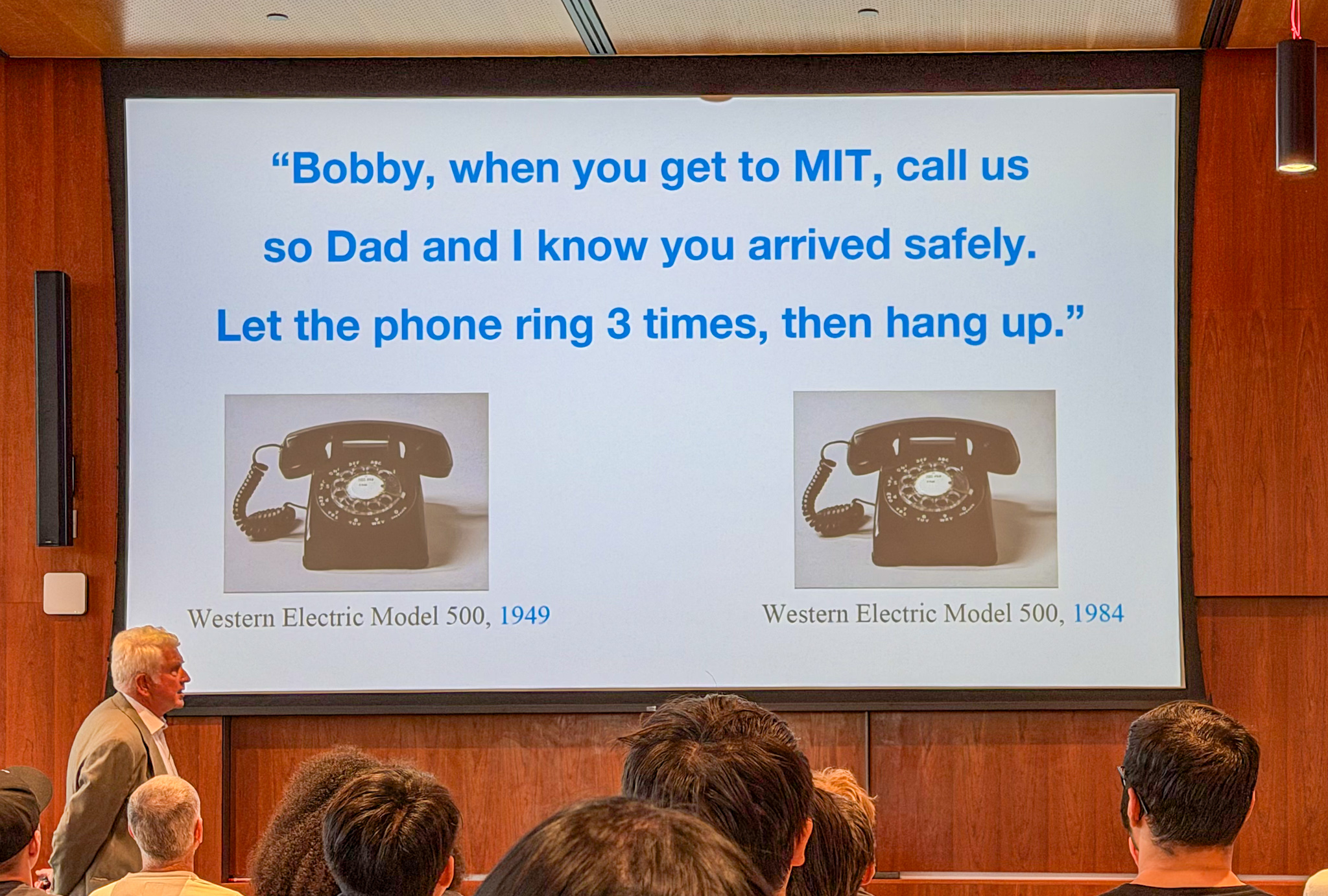
"And by the way, you'll notice that the telephone didn't change much. This is the Model five hundred in nineteen forty-nine. This is the Model five hundred in nineteen eighty-four. This is what happens when you turn an industry over to a monopoly. [00:04:30] It takes forever to do stuff like, for example.... Can you imagine Steve Jobs holding one of these up- -every year?"
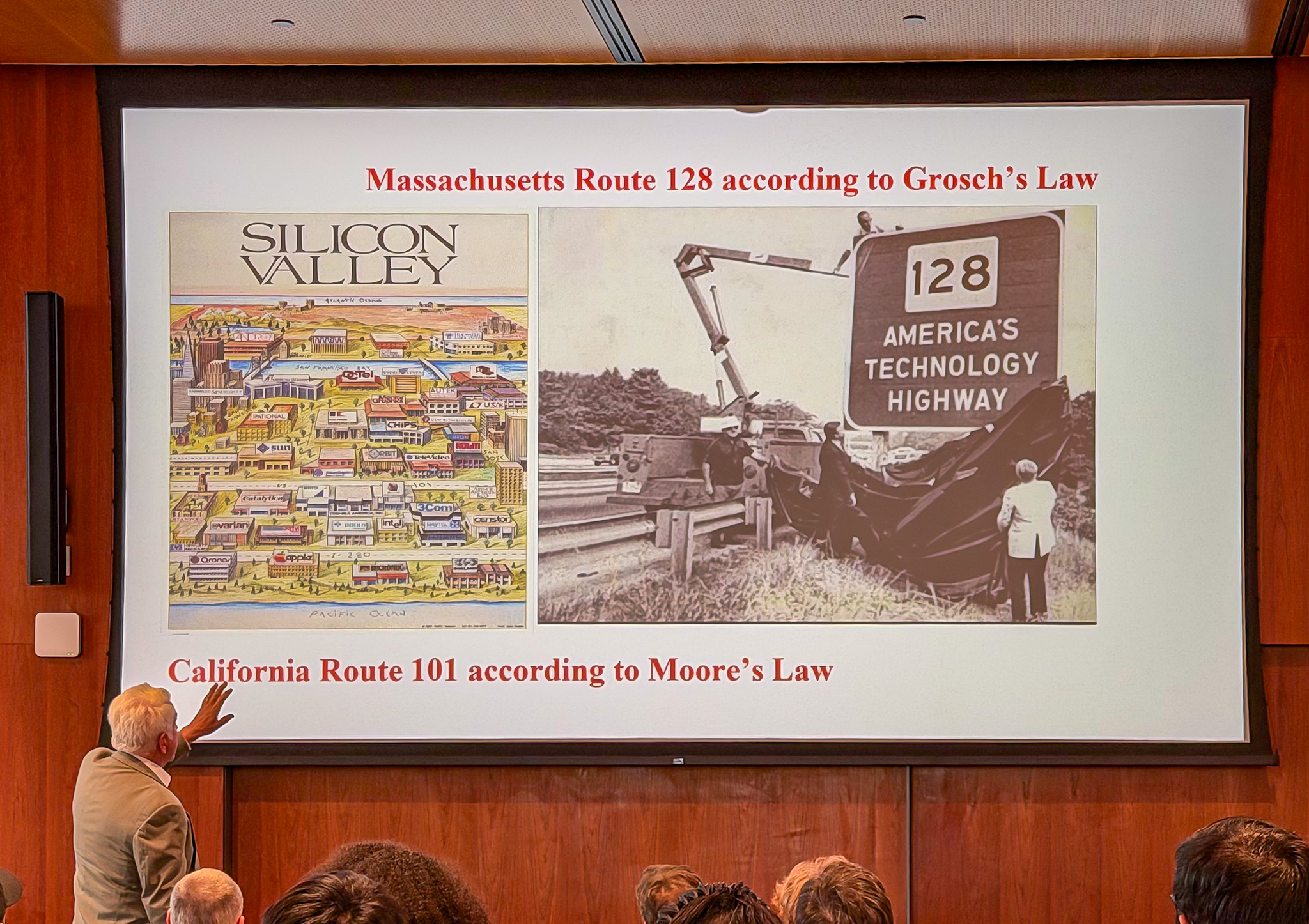
"Now there are some surprises in this history, and I've chosen three, and I'm calling them reversals. The first one — there was an IBM executive named Roche [sic], and he plotted the cost of IBM mainframes versus their total power."
"His law, roughly speaking, is bigger computers are better. So IBM and others all went out and built bigger computers. Meanwhile, [00:37:00] across the country in Palo Alto and around, was the — Moore's Law said smaller computers are better, in essence. So you have the East Coast adopting the mainframe mindset and the West Coast adopting the PC mindset, and guess which one won? Semiconductors won."
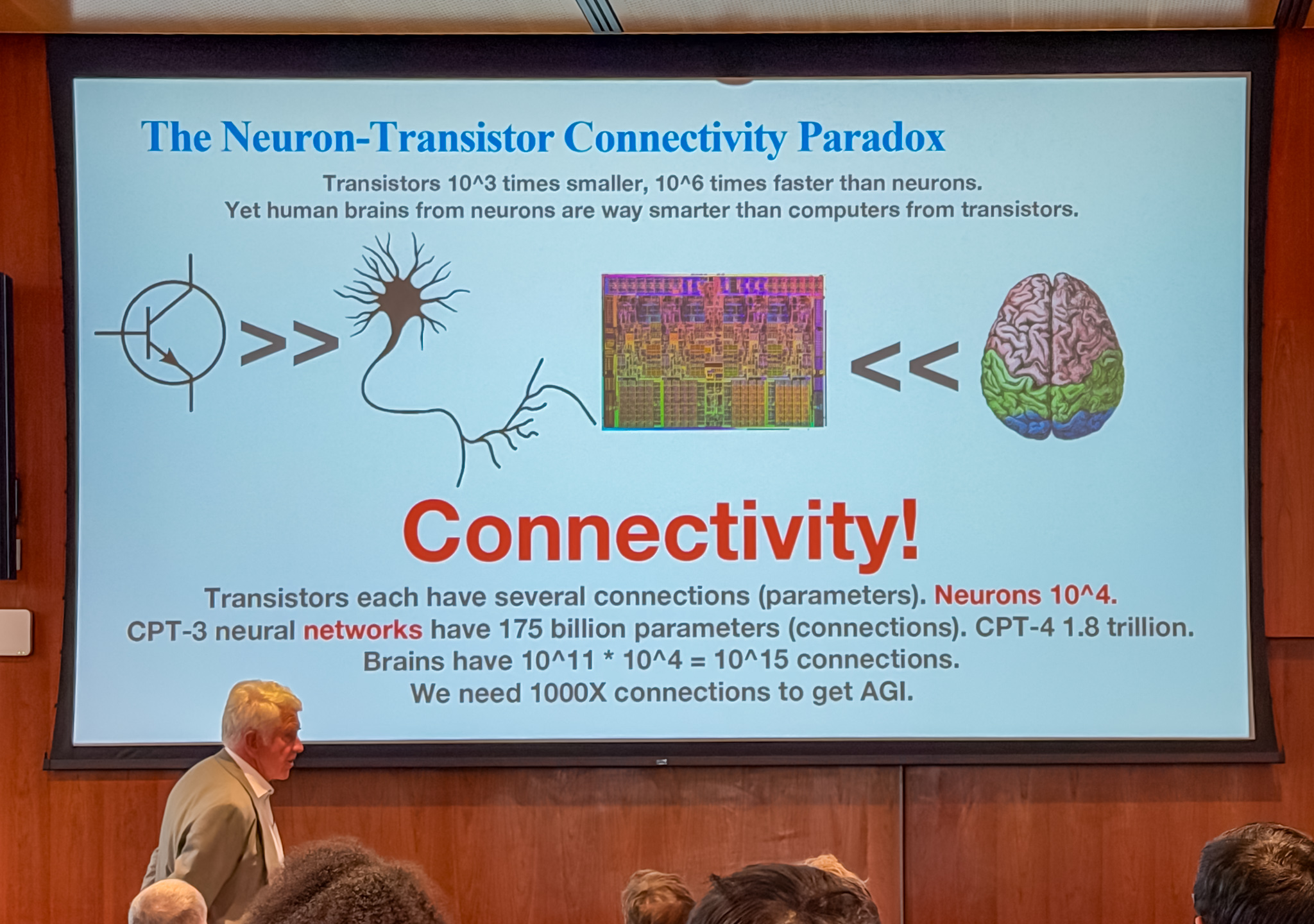
"Here's a paradox. Neurons — you all have them. Billions of years old, pitifully slow and huge compared to transistors. Transistors are like a — what's it say here? Oh, there it is — transistors are a thousand times smaller and a million times faster than neurons. And yet, human brains, which are built out of pitiful neurons, are much faster and intelligent than what we can build using transistors. You all see the paradox? How can that be? You take these slower things and you make a [00:41:30] faster thing."
"And the answer is the theme of my talk, which is almost over now — connectivity. The connectivity of transistors is typically one or two or three, and the connectivity of a neuron is typically ten thousand. So the way that the neuron gets to be so powerful is by connectivity among..."
Explore the world in amuz.
 |  |