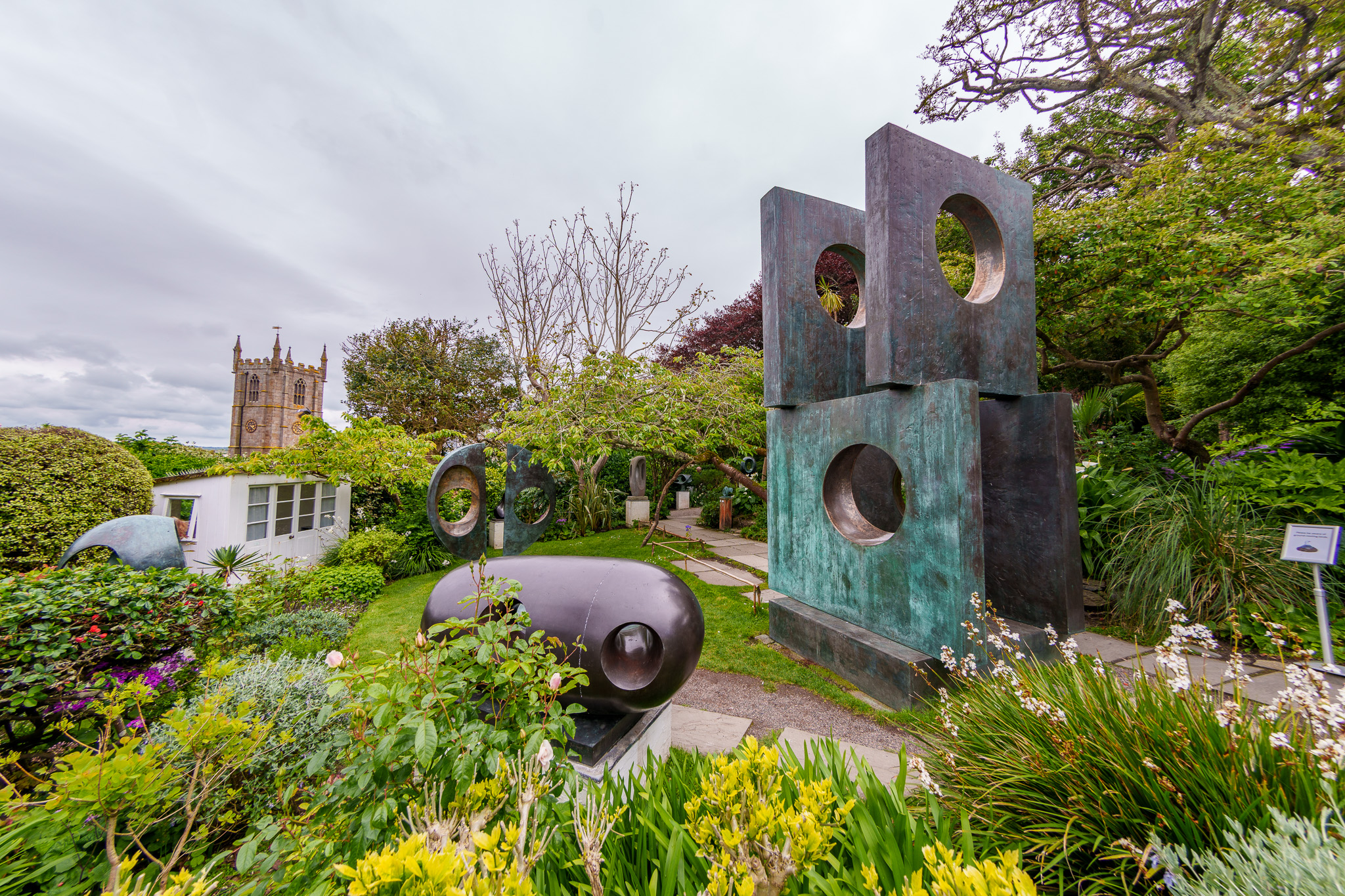
The site was billed as “the magical home, studios and garden of one of the greatest sculptors of the twentieth century.” The description was not hyperbole.
I find house museums often provide a fascinating peek into the life and philosophy of their original owners. Ms.Hepworth’s home feels intact and occupied in a way that makes one think at any moment she may well return, don one of the work smocks, and pick up her chisel. Large marble slabs sit outside awaiting transformation. The array of medieval looking tools suggest Hepworth had not only talent but strength.
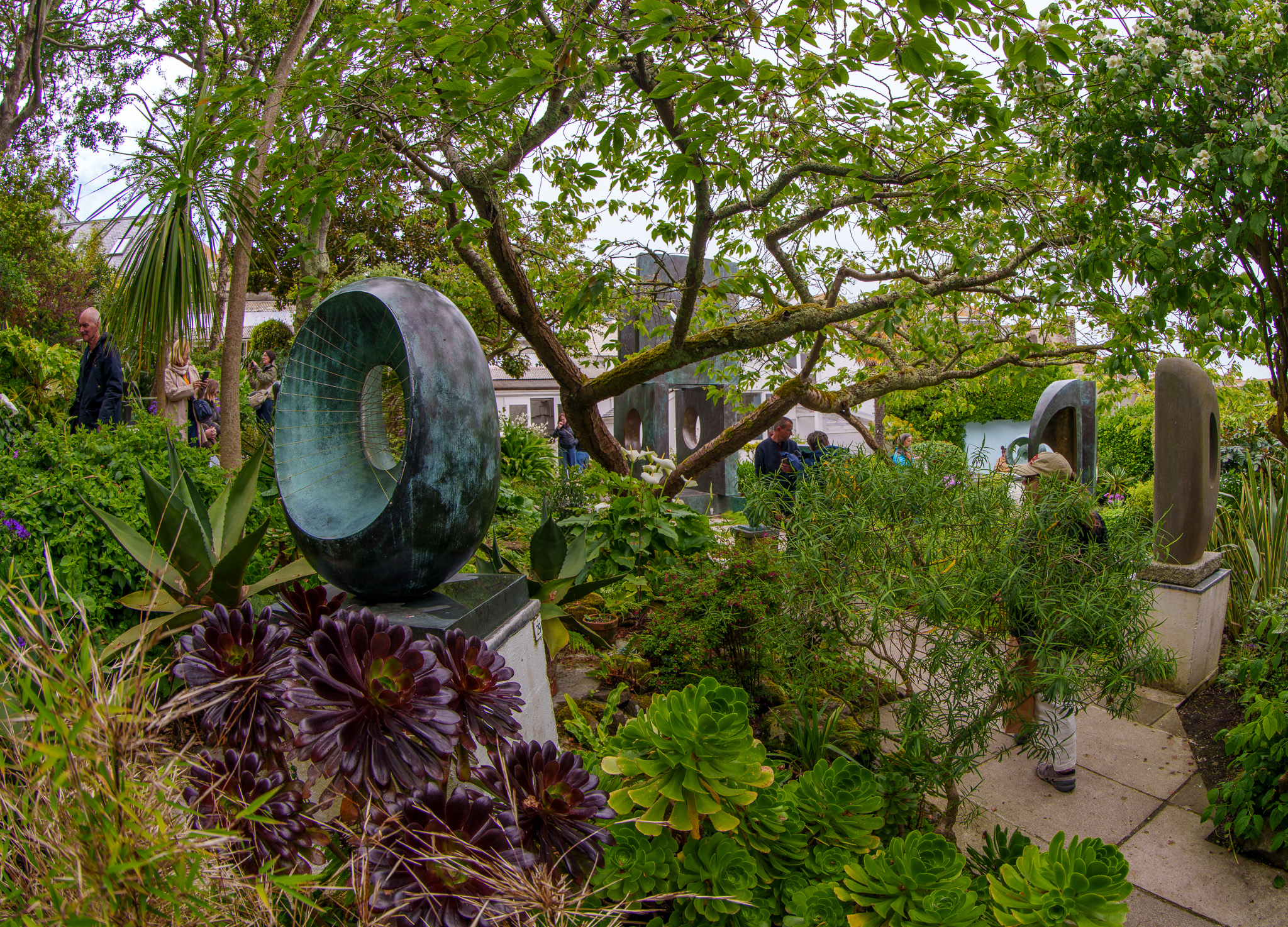
Barbara Hepworth is so extraordinary as to defy adjectives. There were many layers to her life. It is a struggle to encapsulate just how artistic,visionary, passionate and accomplished she was.
Entry to the museum is through the former kitchen of the house. Here you will get the abbreviated biographical details of an exceptional life. She was born in 1903 in Wakefield, West Yorkshire to a well off family, her father was an engineer and alderman. Her talent for mechanical construction may be attributed to him.
She excelled as a student and received scholarships to elite schools. Barbara claimed exposure to images of Egyptian sculptures as a child informed her desire to be a sculptor.
In 1920 she received a scholarship to the Leeds School of Art. There she met friend and contemporary rival, Henry Moore. Her education began with drawing but soon shifted to sculpture. She graduated from The Royal College of Art in 1924.
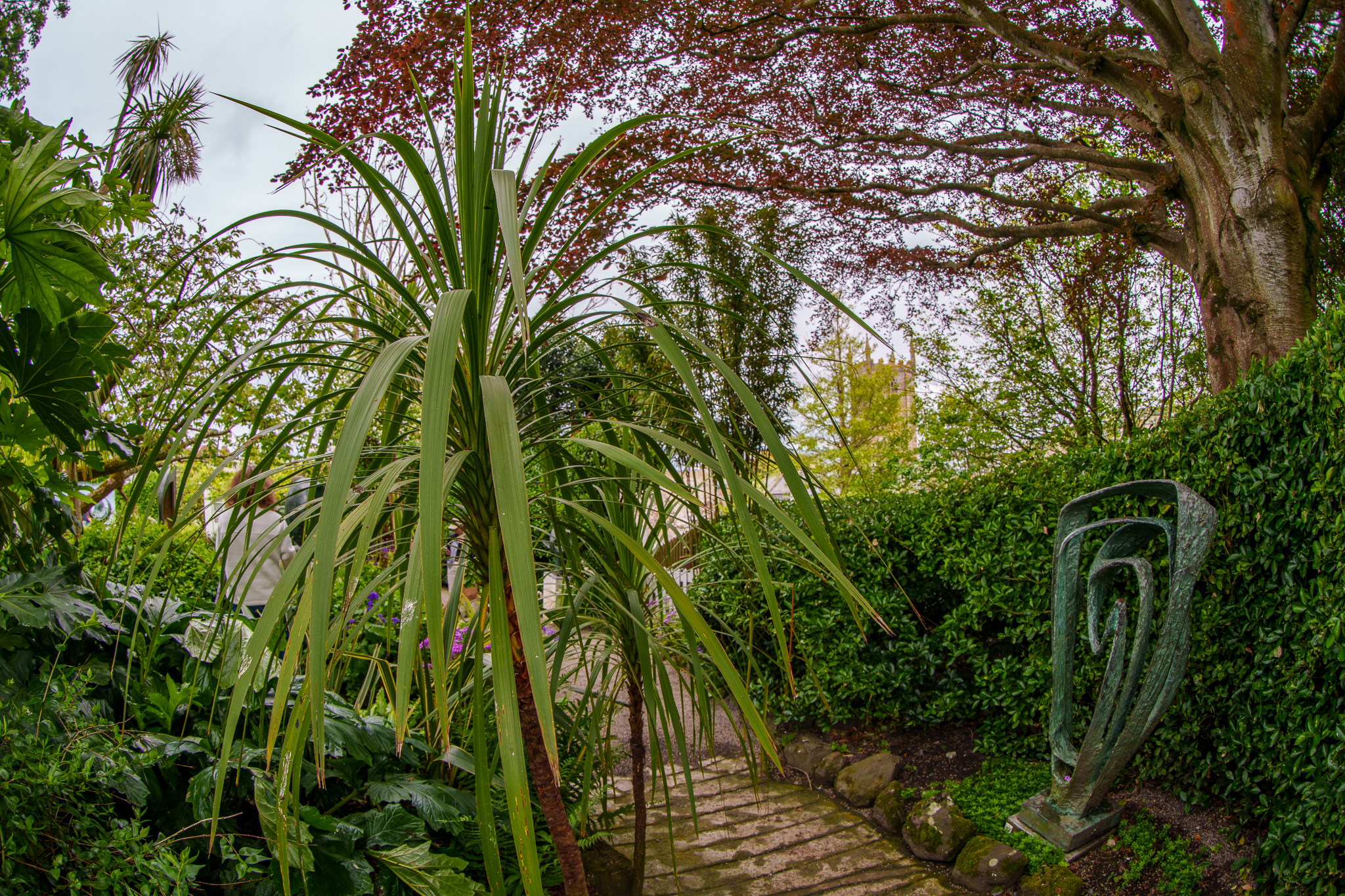
The next year she married sculptor John Skeaping.
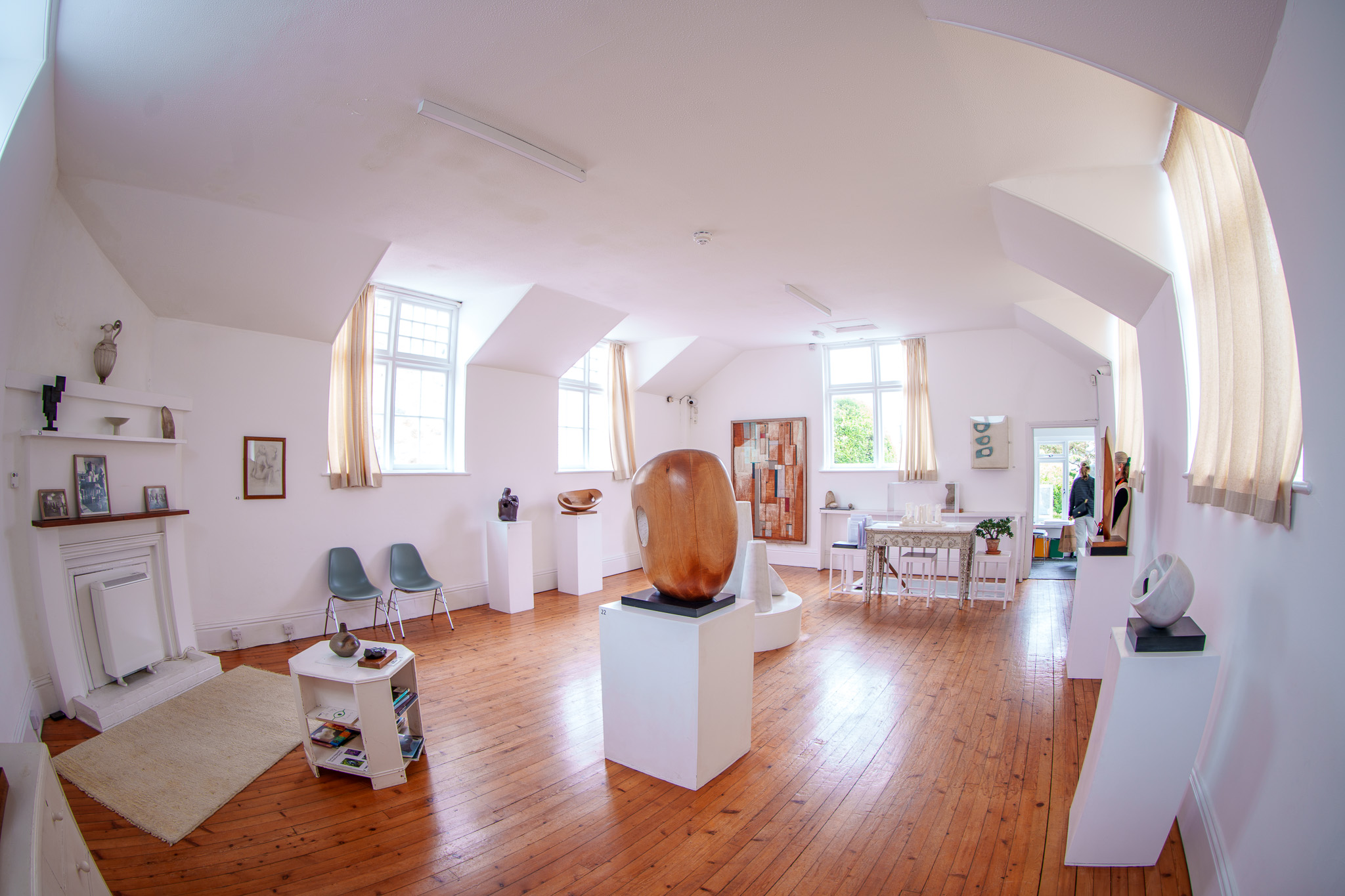
Skeaping won a competition which facilitated travel to Siena, Italy. Together they studied marble sculpting and traditional craftsmanship. She gave birth to her son Paul in London in 1929. There is a touching tribute to Paul in the studio called “Infant” that was created that same year.
In 1931 Hepworth fell in love with the painter Ben Nicholson, who inconveniently was also married. They traveled together to Paris. The couple knew the artists Jean Arp, Pablo Picasso, Piet Mondrian and Constantin Brancusi.
Hepworth’s early sculptures featured pierced figures which are repeatedly used in her work but also later copied by Henry Moore. By 1933 she divorced Skeaping.
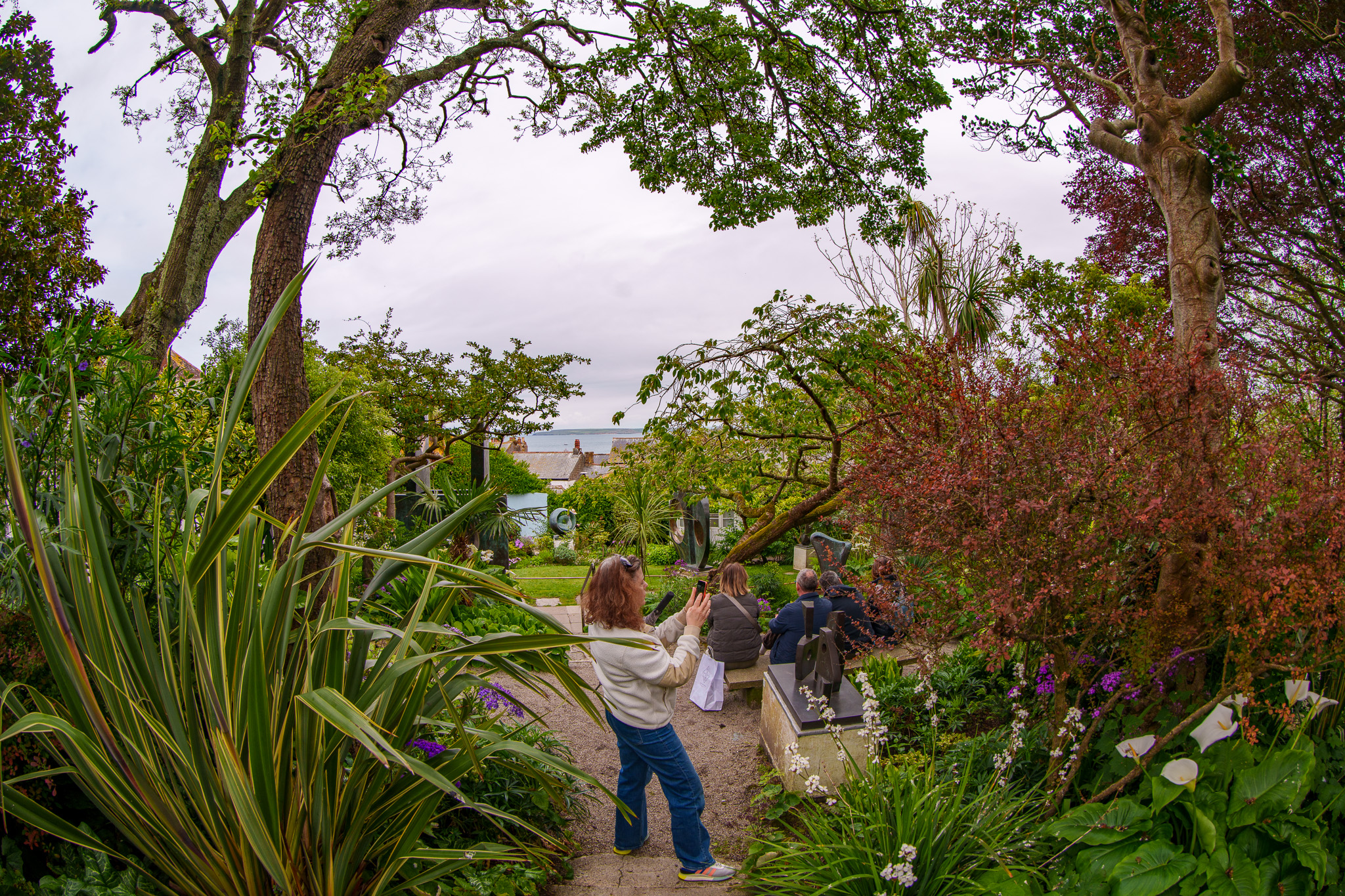
She did not let other’s perceptions dull her drive to have a full life at a time when there would have been few role models for women artists intent on melding societal roles and career ambitions. I remember gasping “no way!” when I read that she and Nicholson had triplets. During this period she created many sculptures with mother and child themes.
St.Ive’s reputation as a center for modern art grew through the mid - twentieth century. Hepworth was part of a circle of modern artists who escaped London or mainland Europe on the eve of the war. In 1939 with her second husband and four young children she moved to St. Ives four days before the start of World War II and continued to work.
They embraced new technology and a vision for the future while recalling the area’s ancient folklore and the belief Cornwall is an inherently spiritual place. More importantly, they were a safe distance from London bombing. The maritime climate and superior light were comforting in a time of uncertainty, fear and few commissions. Hepworth resided in Cornwall for the rest of her life.
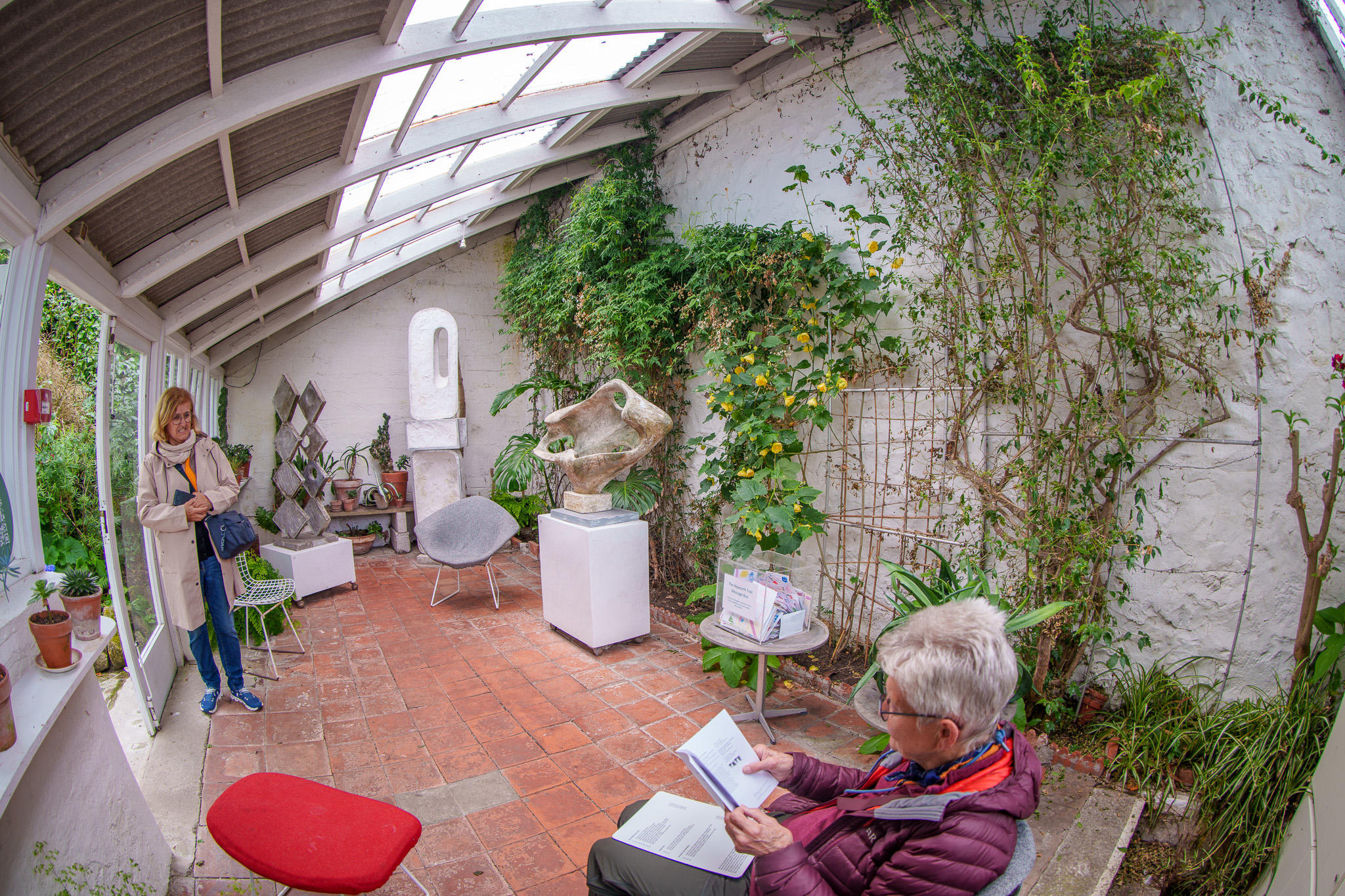
The sustained connection of St.Ives, Cornwall and modern art is evident today because of the presence of the Tate St. Ives mere blocks for the Hepworth Studio. The Tate administers the Hepworth Museum.
In 1951 Hepworth and Nicholson divorced. She began to create metal castings. This new to her medium meant she could more easily create large and lighter works. The 1960s were her most prolific period. In her lifetime she received Royal recognition, CBE and DBE as well as many academic honorary degrees.
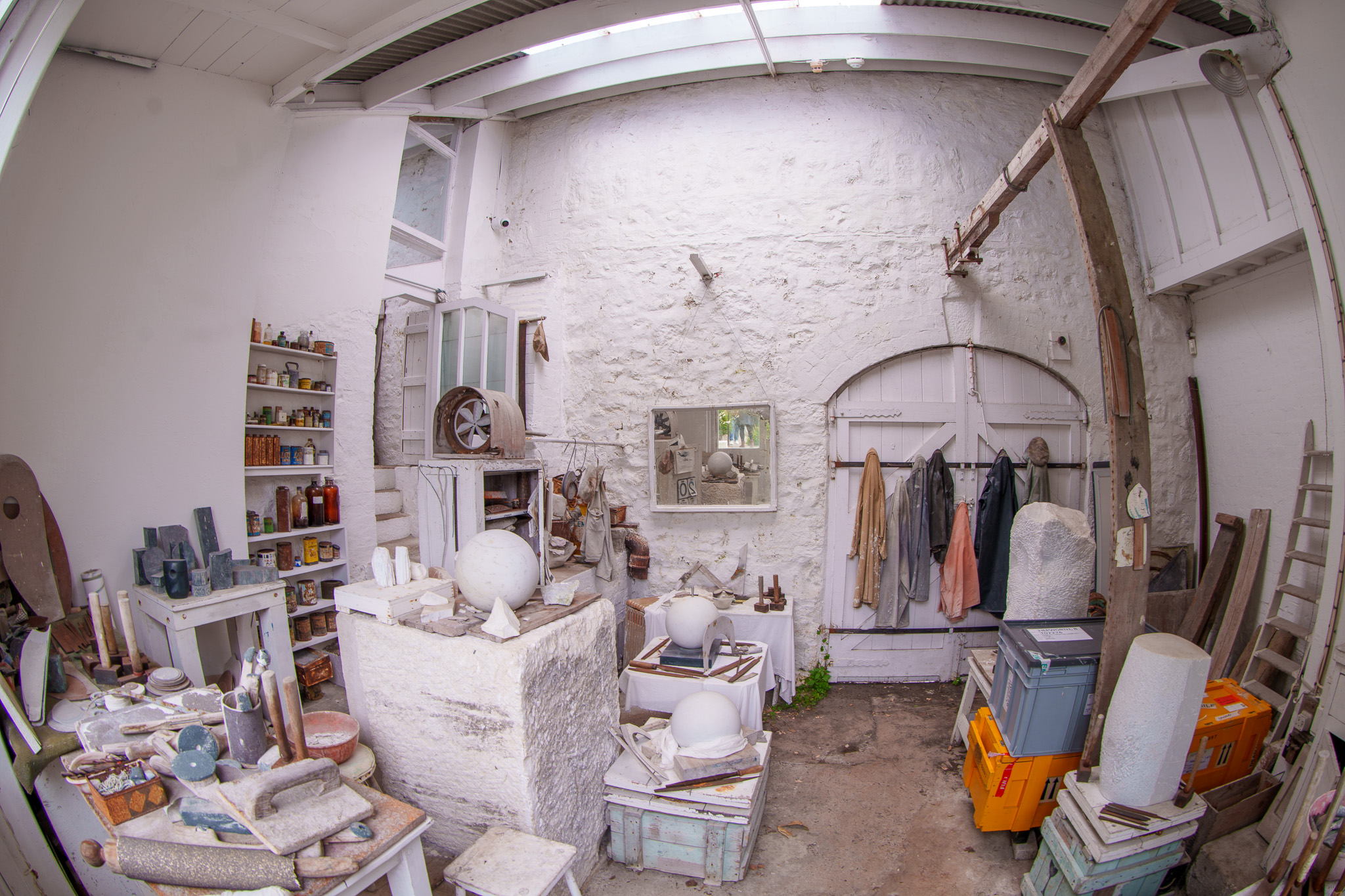
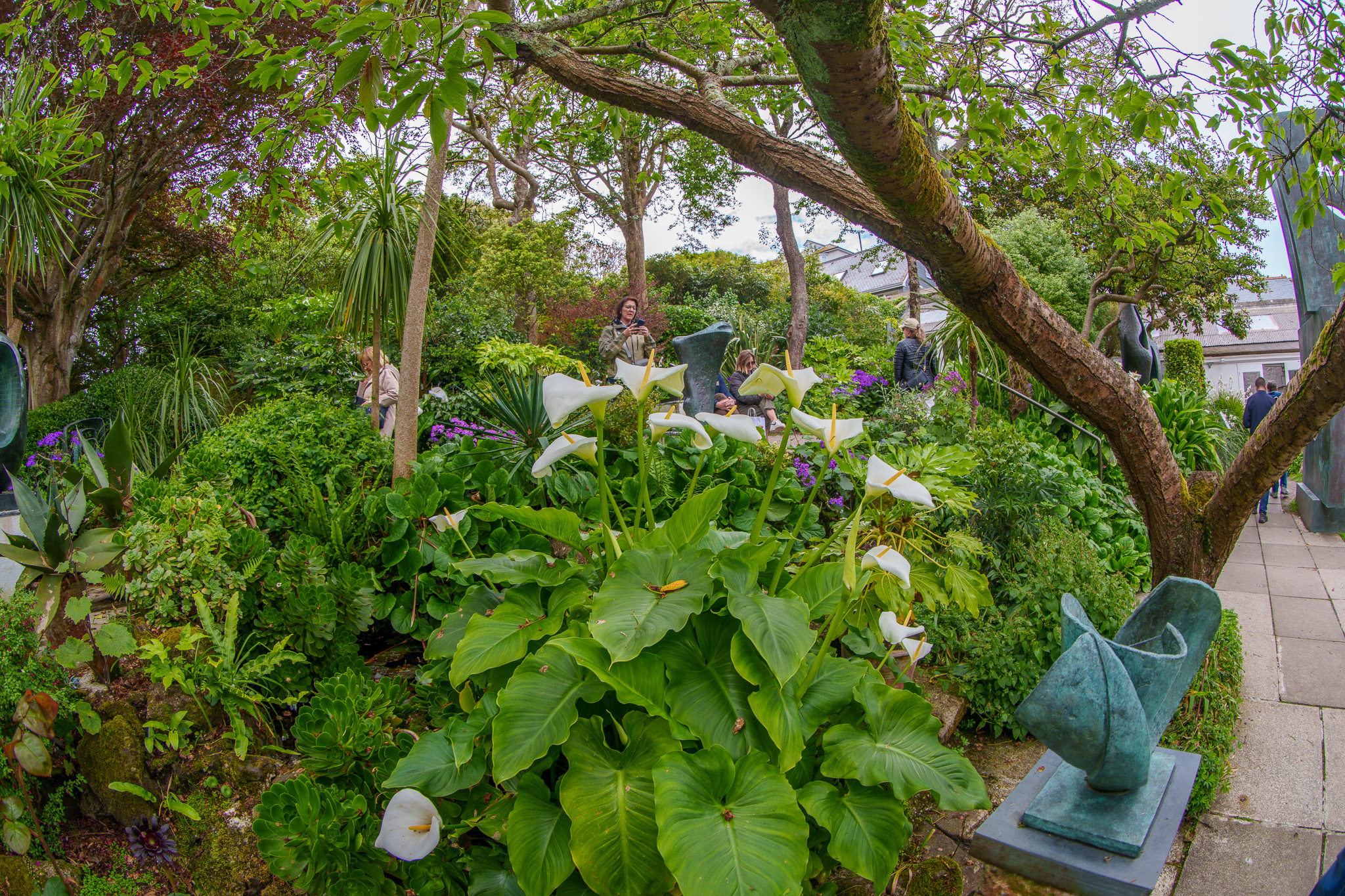
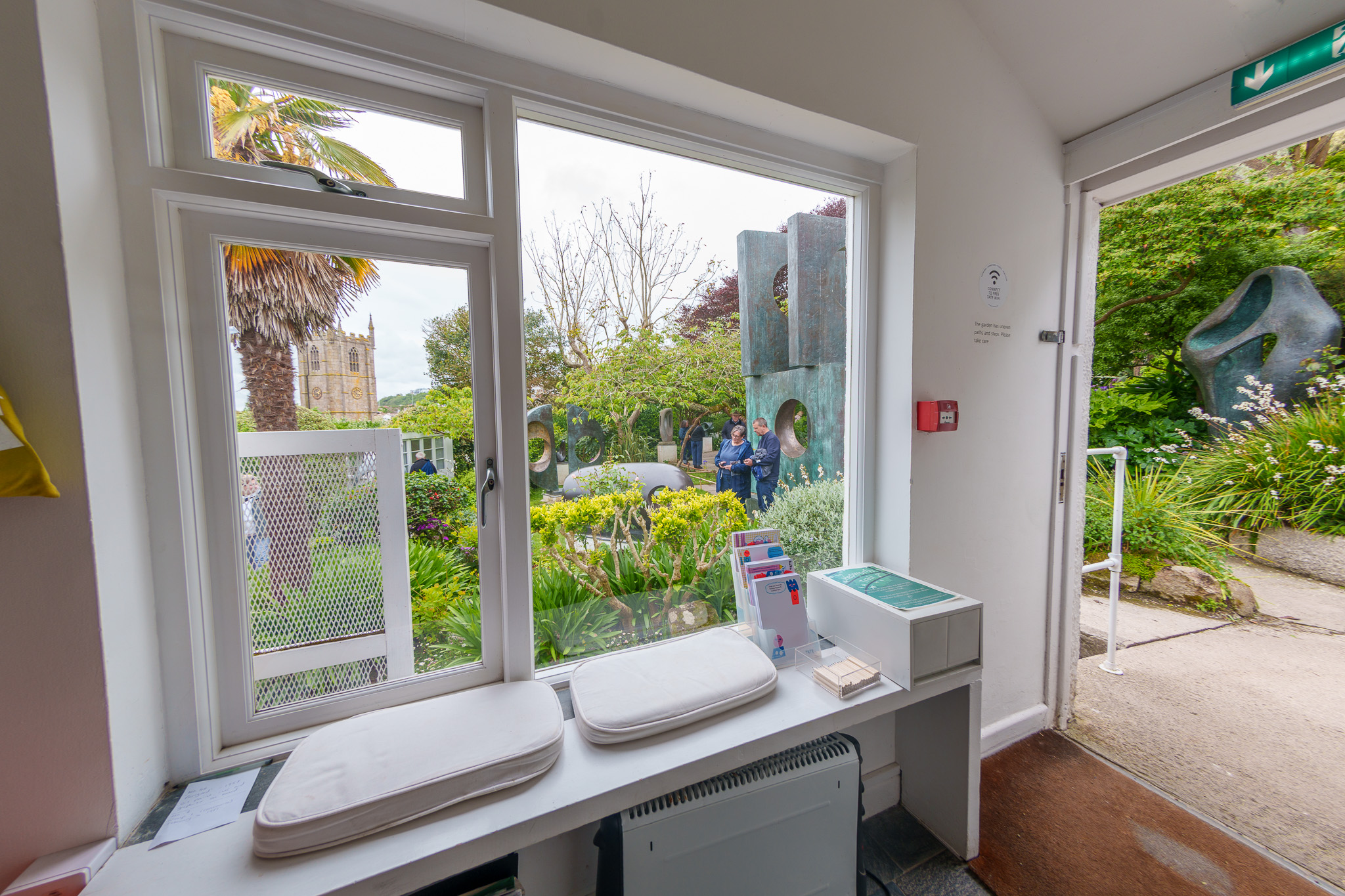
The ticket taker promised the star of the visit would be the back garden. Acquired in 1949, it was at that time a formal English rose garden. During her time in residence Hepworth transformed the space into a more informal and naturalistic space that visitors experience today. It was a place where she could work outside year around. It is ultimately a home for many of her sculptures.
I learned a lot in the other rooms about the artist and her work. I felt the most in the garden. The placement of the works encouraged 360 degree immersion. Walking around, looking through objects and feeling her intent was palpable. The woodland setting in the back of the garden gives way to a light filled view of the town and the sea below.
Sadly, Hepworth died in an accidental fire in her home in 1975. She was said to be shy and not one for much self promotion, but there has been sustained interest in her work.
If you make it to Cornwall, look about the town as she generously donated several pieces to her adopted community.
On a midwestern side note, it was a thrill to discover that three of Hepworth’s works reside in Minnesota at the The University of Minnesota Arboretum's Harrison Sculpture Garden.
The sculptures are the gift of Alfred Harrison and Ingrid Lenz Harrison. Their contemporary collection was amassed during their married lifetime and includes works by artists from around the world, including Italy, England, Zimbabwe and Argentina.
Links to the Hepworth sculptures:
https://arb.umn.edu/art/harrison-sculpture-garden/crucifixion
https://arb.umn.edu/art/harrison-sculpture-garden/epidauros
https://arb.umn.edu/art/harrison-sculpture-garden/summerdance